

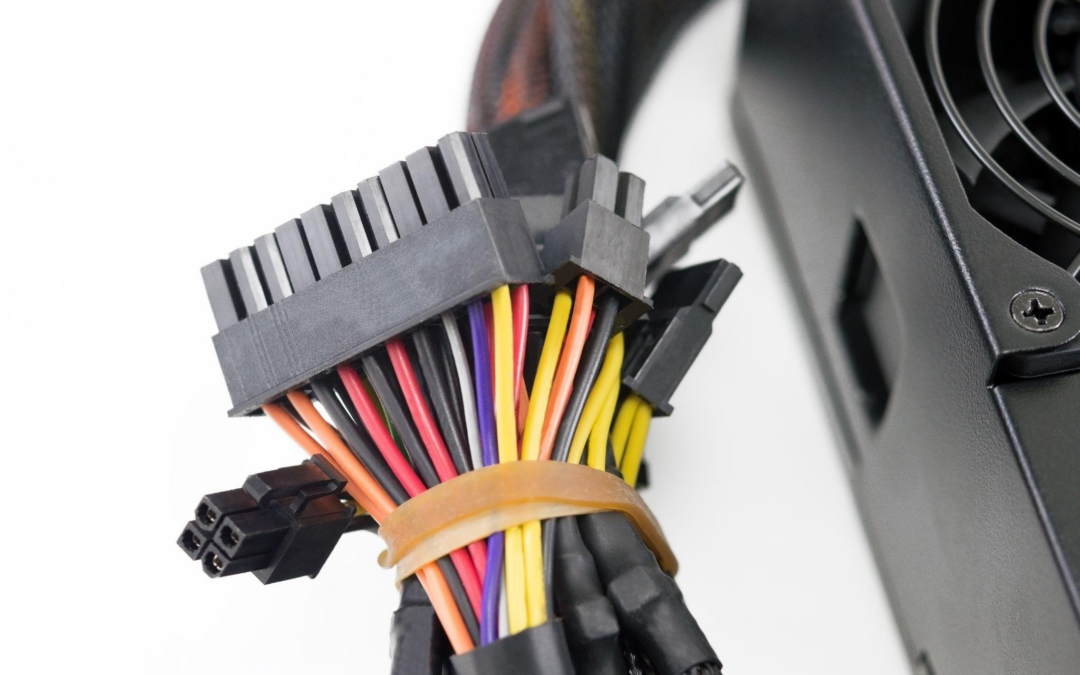
A custom wiring harness manufacturer reduces production strain by simplifying assembly steps, preventing errors before they reach the line, and delivering assemblies that fit your equipment exactly. This is especially true for specialized equipment where standard harnesses are not available.
Modern equipment depends on clean electrical integration, yet many manufacturers still struggle with delays, rework, and supply issues tied to wiring assemblies. These issues are often amplified in low- to mid-volume builds, where off-the-shelf solutions require modification, introducing variability and adding potential failure points.
This blog explains where those problems start, how a tailored harness approach can solve them, and what practical improvements you can expect when the work is done right. You’ll see how design collaboration, application-specific material selection, and production alignment come together to support more complex, integrated systems.
Streamlined Assembly From Day One
Harnesses Built for Your Exact Layout
When wiring assemblies are designed around your enclosure, routing paths, and connection points, installation becomes a defined process. Lead lengths, connector selection, and branch locations are established during design, eliminating the need for on-the-floor adjustments.
This level of upfront definition reduces installation variability and ensures each build follows the same repeatable path. Technicians spend less time referencing documentation and more time executing a known, validated layout.
Faster Training and Consistent Results
A well-defined harness simplifies training by removing uncertainty from the assembly process. Instead of relying on tribal knowledge or workarounds, new team members follow a consistent, documented method.
This consistency becomes especially valuable in low- to mid-volume production, where repeatability is harder to maintain. A properly designed harness ensures uniform results across builds without requiring constant oversight or rework.
Fewer Errors and Less Rework
Design Validation Before Production
A custom wiring harness manufacturer works closely with your engineering team before anything enters production. Electrical requirements, connector selection, routing constraints, and environmental conditions are reviewed as part of the design process.
Validating these details early ensures the harness aligns with the overall system, not just the schematic. Issues addressed during design prevent downstream failures, reducing the risk of line stoppages, troubleshooting delays, and field-related problems.
Built-In Quality Checks
Custom harnesses are verified as complete assemblies prior to delivery. This includes continuity testing, visual inspection, and validation against defined build criteria.
By confirming performance before installation, potential faults are identified early, when they are easier to correct. This reduces the likelihood of rework at the system level, where issues are more difficult and costly to resolve.
Smarter Material Management
Exact Components With No Excess
Custom harnesses are built using only the components required for your specific application. Connector types, wire specifications, and branch configurations are defined during design, eliminating unnecessary leads or unused terminations.
This reduces physical clutter within the system and simplifies both installation and long-term serviceability. It also minimizes the risk of incorrect connections or unused circuits introducing confusion during assembly or maintenance.
Stable and Controlled Component Selection
Working with a focused supplier ensures consistency in component selection across builds. Materials, connectors, and construction methods remain aligned with the original design intent, reducing variability between production runs.
This level of control is especially important in low- to mid-volume applications, where inconsistencies are more likely to surface. A stable approach supports predictable builds without requiring constant revalidation or adjustment.
Improved Equipment Performance
Designed for Operating Conditions
Custom harnesses are engineered with the actual operating environment in mind. Temperature exposure, vibration, moisture, and mechanical movement are all considered during design and material selection.
This ensures the harness performs reliably under real-world conditions, not just in controlled environments. Proper routing, protection, and component selection reduce the likelihood of intermittent faults, connection failures, or premature wear.
Supporting Complex Electrical Systems
In more advanced applications, such as engine control systems, wiring plays a direct role in system performance. Signal integrity, grounding strategy, and circuit separation must be considered to ensure stable communication and predictable operation.
A properly designed harness supports these requirements without adding unnecessary complexity. As systems evolve, having a partner familiar with these considerations makes integration, troubleshooting, and future updates more manageable.
Long-Term Production Efficiency
Easier Scaling and Controlled Updates
As production volumes change or system designs evolve, harness requirements often need to be adjusted. A custom wiring harness manufacturer maintains controlled documentation through a defined revision processes, allowing updates to be implemented without disrupting ongoing production.
Changes are applied in a structured and traceable manner, ensuring each revision is clearly defined and aligned with current system requirements. This approach reduces engineering effort, prevents version confusion, and keeps production moving without unnecessary delays.
Clear Documentation and Traceability
Well-defined documentation supports both troubleshooting and long-term product support. Build records, revision history, and configuration details provide visibility into how each harness was produced.
When issues arise, this traceability allows teams to quickly identify root causes and implement corrections with confidence. It also supports consistency across production runs, ensuring that each unit meets the design expectations.
Supporting Precision-Driven Designs
In applications such as engine control systems, wiring design directly impacts how the system performs. Signal separation, grounding strategy, and routing all play a role in maintaining stable and predictable operation.
Addressing these factors during harness development helps reduce electrical noise, prevent unintended interference, and ensure the system performs as intended.
Conclusion
Choosing the right wiring approach influences assembly flow, product reliability, and long-term production efficiency. A custom wiring harness manufacturer brings structure, clarity, and control to an area that often introduces unnecessary complexity.
By simplifying installation, reducing errors, and aligning materials with actual system requirements, teams can achieve more predictable builds and improved overall performance.
For applications that require more than a standard solution, particularly low to mid volume equipment or systems with specific electrical and environmental demands, a tailored harness approach provides clear advantages.
If you’re working through a system where wiring is more than just a connection point, and need a harness solution aligned with your design, MBW Technologies offers the engineering support and collaboration to move your project forward.