

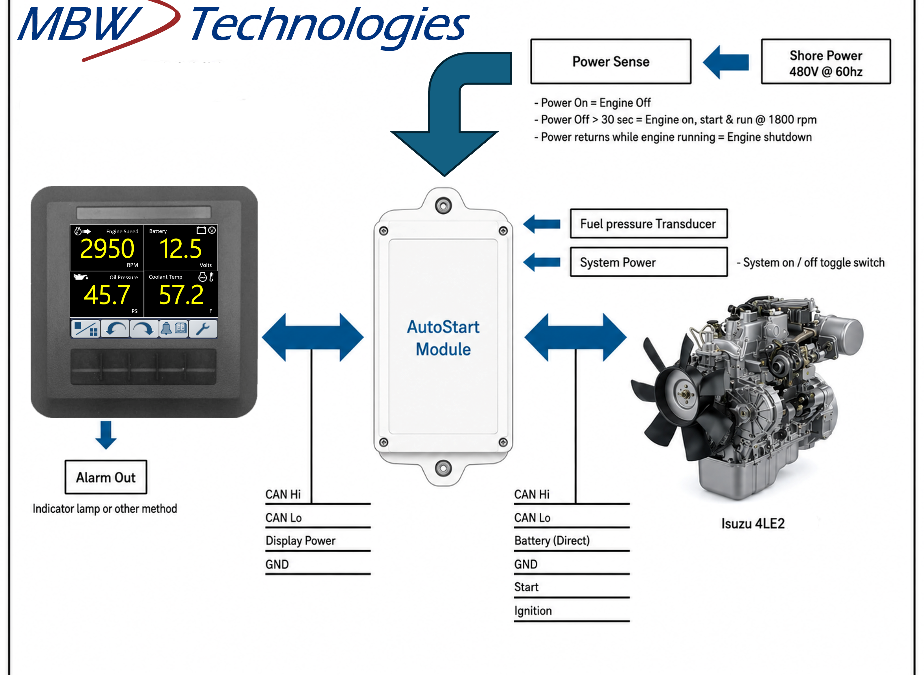
Choosing a diesel engine controller is not simply selecting a display or control panel. The right solution starts with understanding the engine being used and how that engine needs to be controlled
In many applications, the controller type is largely determined by the engine itself. An electronically controlled engine will typically require a different control approach than a mechanically governed engine. That difference affects communication, diagnostics, operator information, control functions, and overall system design.
Engine Selection Drives Controller Requirements
Electronically controlled diesel engines use an engine ECU to monitor and control engine operation. In many applications, the controller or display communicates with the ECU over the CAN bus using the J1939 protocol. This allows the display to receive engine data, diagnostic trouble codes, operating status, and other information from the engine.
Mechanically governed diesel engines are different. These engines often do not have an ECU providing engine data over the CAN bus. Instead, the control system may rely on sensor inputs, switches, senders, relays, and other hardwired signals connected directly to the monitor or controller.
Because of these differences, the controller is usually selected around the engine type and available signals.
Emissions Requirements Can Influence the Engine Choice
Cost is often part of the engine selection process, and mechanically governed engines can be simpler and less expensive to control than electronically controlled engines. However, cost is not the only factor.
Environmental and emissions requirements can also influence what type of engine is appropriate for the application. Depending on the region, application, model year, and engine power rating, the equipment may need to meet specific emissions standards.
In many modern applications, those requirements lead to electronically controlled engines with ECU communication, diagnostic reporting, and aftertreatment support. In other applications, a mechanically governed engine may still be appropriate where regulations, power requirements, and equipment needs allow.
When an Electronic Engine Requires a J1939 Controller
An electronically controlled diesel engine often requires a controller that can communicate with the engine ECU over the CAN bus (Controller Area Network) using the J1939 protocol. These systems can display engine data from the ECU, monitor diagnostic messages, support engine speed control, and show engine or aftertreatment-related information.
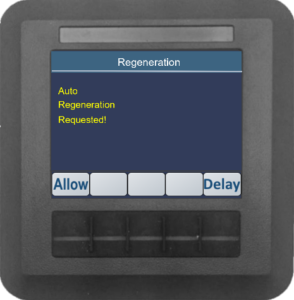
This type of controller is often used with newer diesel engines, Tier 4 Final and Stage V applications, and equipment where engine diagnostics and ECU communication are an important part of the system.
In these applications, the controller is not just showing basic gauge information. It may also help the operator understand engine faults, regeneration status, shutdown conditions, or other messages being reported by the engine ECU.
When the Engine Requires a Mechanical Controller
A mechanical diesel engine controller is used when the engine does not rely on an ECU for electronic control or CAN-based communication. These controllers are often used with mechanically governed engines, older engine platforms, or applications replacing traditional analog gauge panels.
In this type of application, the controller may monitor oil pressure, coolant temperature, fuel level, speed, shutdown switches, and other hardwired inputs. It may also control relays, alarms, shutdown circuits, or start/stop functions depending on the system configuration.
A mechanical controller can give older or non-ECU engines a more modern operator interface while still supporting the type of signals those engines actually provide.
The Application Still Matters
The engine type is the starting point, but the application still matters. A pump package, agricultural machine, industrial power unit, or retrofit panel may each require different inputs, outputs, operator screens, alarms, shutdown behavior, or control logic.
This is why controller selection should consider both the engine and the equipment. The best controller is not simply the most advanced option. It is the one that fits how the machine is built, operated, and supported.
How MBW Can Help
MBW Technologies works with OEMs and equipment builders to help match diesel engine controller solutions to the application. Depending on the engine and equipment requirements, this may include J1939-based controllers for electronically controlled engines, mechanical controllers for non-ECU engines, custom display screens, configurable I/O, diagnostic handling, and application-specific control logic.
The goal is to select a controller that fits the engine, equipment, and operating requirements rather than forcing the application around a control system that does not fit.
Need help selecting the right diesel engine controller for your application? Contact MBW Technologies to review your engine, equipment requirements, and control system needs.