


In an engine control system, the wiring harness is not just a way to connect electrical components. It is part of the system design.
The harness connects the controller, engine ECU, display, switches, sensors, shutdown circuits, power supply, and other machine interfaces into one working system. When that harness is designed well, installation is cleaner, troubleshooting is easier, and the finished equipment is easier to support.
When it is not, small wiring issues can create problems that are difficult to diagnose. A crossed CAN connection, unclear labeling, poor routing, incorrect wire length, or poorly placed connector can lead to extra assembly time, field service calls, or intermittent issues that are hard to reproduce.
That is why harness design should be considered a critical part of the overall engine control system, not just an afterthought.
Harness Design Affects How the System Behaves
In an engine control system, wiring problems do not always look like wiring problems at first. They may show up as communication faults, missing sensor values, intermittent shutdowns, failed start commands, or control functions that do not respond the way they should.
That is what makes harness design so important. The controller, display, and engine ECU may all be configured correctly, but the system still depends on clean, consistent connections between them. If the CAN wiring is crossed, a shutdown input is wired incorrectly, or a connector is difficult to access for testing, troubleshooting can quickly become complicated.
Good harness design helps reduce that uncertainty and gives technicians a more consistent layout to inspect, test, and verify when something does not work as expected.
Designing for Repeatable Installation
For OEMs and equipment builders, one good installation is not enough. The goal is to build the same system correctly again and again.
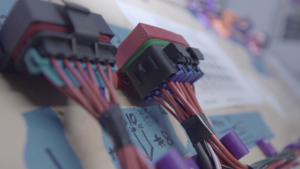
A well-designed harness helps make that possible. Wire lengths, branch points, connector locations, labels, and protective covering can all be built around the actual equipment layout. That gives installers a clear path to follow instead of requiring each unit to be wired from scratch.
This is especially helpful when production volume increases or when multiple technicians are involved. A consistent harness design reduces interpretation during assembly and helps each finished system follow the same electrical layout.
Serviceability After Installation
Harness design also affects what happens after the equipment leaves production. A system may work correctly when it ships, but future service still depends on being able to understand and access the wiring.
Clear labeling, logical connector locations, organized routing, and accurate harness documentation can make a major difference when a technician needs to troubleshoot a fault, replace a component, or verify a signal in the field. Harness drawings, pinout information, wire colors, connector details, and revision history give service teams a reference point instead of forcing them to trace every connection from scratch.
This is especially important in engine control systems because the source of a problem is not always obvious. A fault may involve the engine ECU, the controller, a sensor, a shutdown input, the CAN bus, or the wiring between them. A serviceable harness layout, supported by clear documentation, helps narrow that path more quickly.
Designing Around the Application
A harness that works well in one engine control system may not be the right fit for another. The engine model, controller type, enclosure location, sensor package, shutdown requirements, and machine layout can all affect how the harness should be designed.
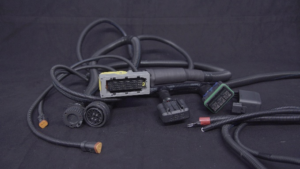
For example, a pump package with remote start and shutdown inputs may have different wiring needs than a simple manual control panel. A system using J1939 communication may also require careful attention to CAN wiring, connector layout, and termination. In other applications, the important details may be sensor wiring, environmental protection, service access, or how the harness routes through the equipment.
Instead of using a generic wiring layout and adapting your application to it, the harness can be custom designed around your actual control system. This includes the engine interface, controller location, enclosure design, sensor connections, shutdown inputs, and service access needed for the specific machine.
Looking at the Whole System
Custom wiring harness assembly should support the full engine control system, not just the wiring on its own. The harness, controller, display, engine interface, sensors, switches, and safety circuits all need to work together as one system.
That is especially important when the control system includes application-specific requirements, such as remote start, speed control, external shutdown, user-defined alarms, or J1939 diagnostic information from the engine ECU. In those cases, the harness is part of how the system is installed, tested, serviced, and supported.
When harness design is considered during the initial design process, it can help reduce avoidable problems later. The result is a cleaner installation, a more consistent production process, and an engine control system that is easier to troubleshoot when service is needed.
Final Thoughts
A wiring harness may seem like a small part of the overall control system, but it can have a large effect on how that system performs over time. Good harness design can reduce confusion during installation, support consistent equipment builds, and make future service work more straightforward.
For engine control systems, the best harness design is the one that fits the actual application. That includes the equipment layout, controller requirements, engine interface, safety circuits, service access, and the way the machine will be built and supported.
MBW Technologies works with OEMs and equipment builders on diesel engine control systems, including controllers, displays, I/O, engine interfaces, and related harness requirements. If you are working through an engine control application, contact MBW to review the system requirements and determine the best approach.